Recruiters move
faster
in Fullsight

Deliver candidates to your business developers in less time, all within Fullsight.

Try it free
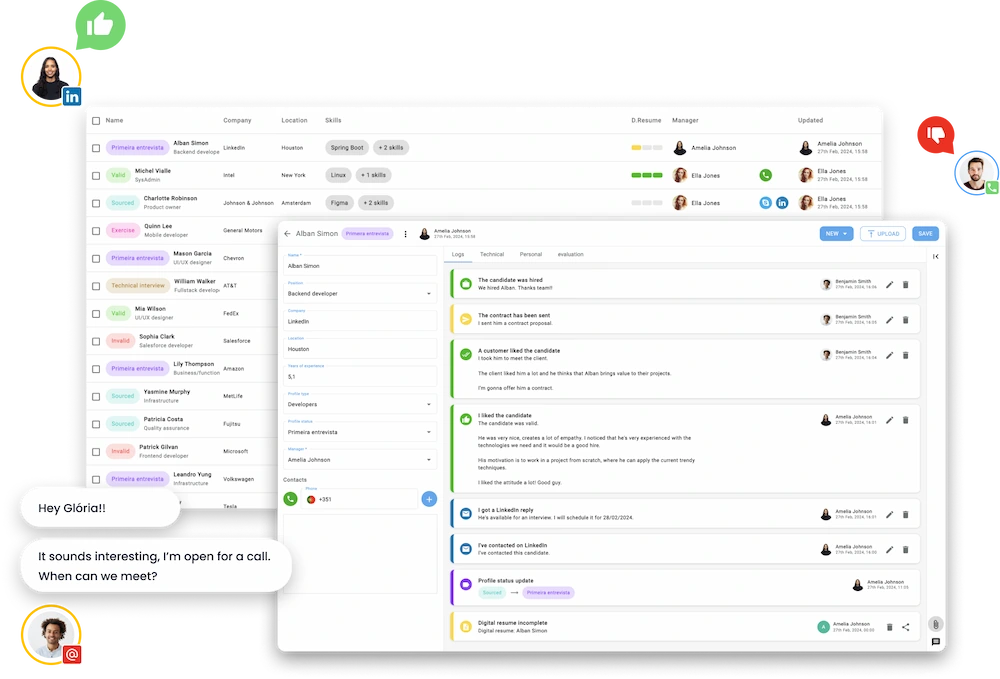
Fullsight's ATS features preview
Fullsight's candidates tracking features

Keep track of all candidates
and their information

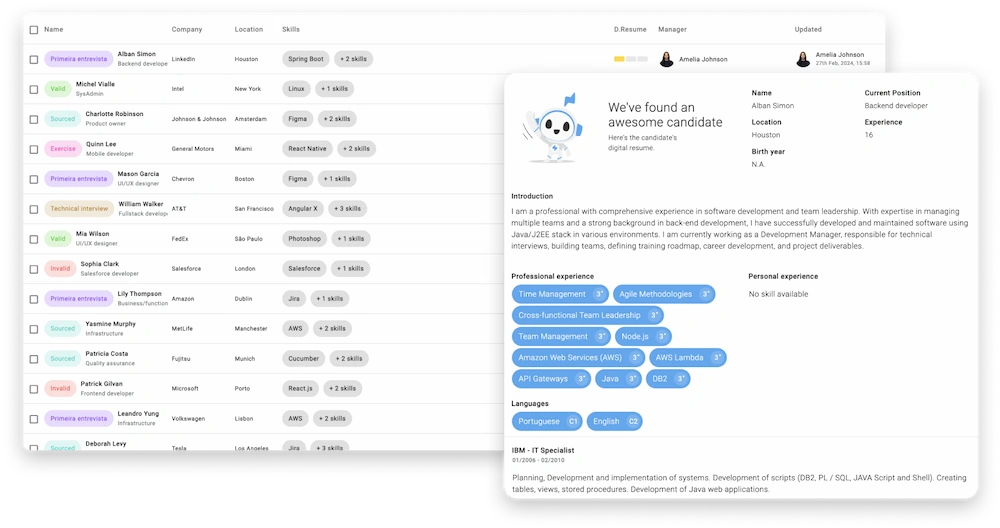
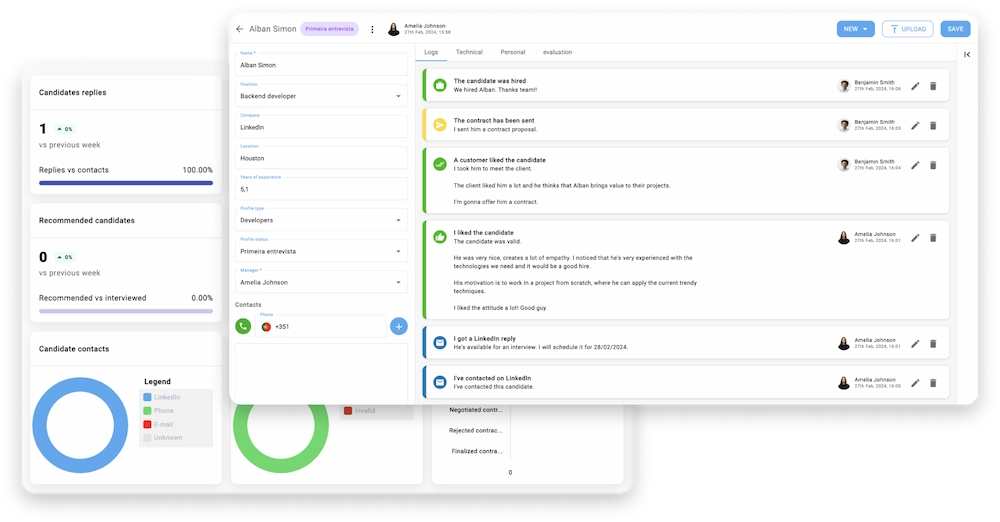
Fullsight simplifies candidate management by offering a centralized place where all candidate profiles are efficiently organized and easily accessible.

  • Track candidates and leverage AI for CV enhancement
  • Follow the candidates’ journey with your company
  • Create and share digital resumes with your candidates and team
How to integrate your ATS with other HR tools

Community

How to integrate your ATS with other HR tools

An Applicant Tracking System is no longer just a tool to collect CVs. In a competitive market shaped by AI recruitment, data-driven decision making and global talent mobility, your ATS must act as the central hub of your HR ecosystem. Integrating it with onboarding, payroll, HRIS and background check solutions transforms recruitment from an isolated process into a strategic engine for growth. Why ATS integration matters When your Applicant Tracking System communicates with other HR tools, you eliminate manual data entry, reduce errors and ensure compliance. Instead of copying candidate information across platforms, data flows automatically from recruitment to onboarding and payroll.This creates three immediate benefits:First, operational efficiency. Recruiters and HR teams save time and reduce administrative tasks.Second, better candidate experience. Once hired, the candidate’s information seamlessly transitions into onboarding without redundant forms.Third, stronger analytics. Integrated systems allow you to connect recruitment KPIs with retention, payroll costs and performance metrics.In industries like IT outsourcing and IT consulting, where speed and precision are critical, this integration can be a competitive differentiator. Integrating your ATS with onboarding tools Onboarding is the first real employee experience after recruitment. When your Applicant Tracking System is integrated with onboarding software, candidate data automatically generates contracts, compliance documents and training workflows.Modern AI recruitment platforms use APIs to connect these systems securely. This ensures that personal information, job details and compensation packages are transferred accurately. It also supports remote hiring, which is essential in IT outsourcing projects that often involve international talent pools.Best practice includes using standardized APIs, ensuring GDPR compliance and conducting regular data audits. Connecting ATS to payroll systems Payroll integration reduces the risk of discrepancies between offer letters and actual payments. Once a candidate accepts the offer, compensation details move directly from the Applicant Tracking System to payroll software.This integration supports transparency and compliance, particularly important in IT consulting environments where project-based billing and variable compensation structures are common. Linking ATS with HRIS platforms Your HRIS is the backbone of employee lifecycle management. When integrated with your Applicant Tracking System, it ensures a smooth transition from candidate to employee record.This unified data structure enables better workforce planning, talent analytics and strategic decision making. In AI recruitment environments, the data collected during hiring can later support performance analysis and internal mobility strategies.Integration also enhances reporting capabilities, allowing HR leaders to track time to hire, cost per hire and long-term retention in a single ecosystem. Automating background checks Background checks are critical for risk management. By integrating your ATS with background verification providers, checks can be triggered automatically once a candidate reaches a specific stage.This reduces delays and ensures compliance with internal and regulatory standards. Automated notifications and status updates improve transparency for both recruiters and candidates.In highly regulated sectors, including technology services and IT outsourcing, this automation protects both clients and organizations. Technical considerations for successful integration To successfully integrate your Applicant Tracking System with onboarding, payroll, HRIS, and background checks, consider the following:Use secure APIs and ensure data encryption.Validate compatibility between platforms before implementation.Prioritize scalability to support business growth.Ensure compliance with data protection regulations such as GDPR.Invest in IT consulting expertise if internal capabilities are limited.Strong IT consulting support is especially valuable when managing complex integrations across multiple vendors and international operations. Build a connected HR ecosystem with Fullsight Integration is not just a technical upgrade. It is a strategic move toward smarter recruitment, stronger analytics, and better workforce management. A modern Applicant Tracking System powered by AI recruitment capabilities can become the core of your entire HR technology stack.Fullsight is an Applicant Tracking System designed to integrate seamlessly with onboarding platforms, payroll systems, HRIS solutions, and background check providers. He combines advanced AI recruitment features with a flexible architecture that supports IT outsourcing and IT consulting environments.If you want to transform your recruitment process into a fully connected HR ecosystem, explore how Fullsight can centralize your Applicant Tracking System and unlock the full potential of your talent strategy.

Read more
How to make your ATS hiring process GDPR compliant

Community

How to make your ATS hiring process GDPR compliant

Recruitment has become increasingly data driven. From CV parsing to AI recruitment scoring, modern Applicant Tracking System platforms process large volumes of personal data every day. This brings efficiency, but it also creates legal responsibility. If your ATS hiring process is not GDPR compliant or at least GDPR like, you may be exposing your company to unnecessary risk, especially in IT outsourcing and IT consulting environments where data often crosses borders.This article explains how to align your Applicant Tracking System with GDPR principles in a clear and accessible way, without killing innovation or slowing down hiring. Why GDPR matters in an Applicant Tracking System The General Data Protection Regulation applies to any organization processing personal data of EU residents. That includes names, emails, CVs, LinkedIn profiles, interview notes and even AI generated candidate scores.An Applicant Tracking System is, by design, a central hub for this information. When combined with AI recruitment tools, the responsibility increases. GDPR requires transparency, fairness, security and purpose limitation. In simple terms, you must know why you collect candidate data, how long you keep it, and who can access it.For official guidance, the GDPR text itself is available at https://gdpr.eu and practical explanations can be found on the European Commission website https://commission.europa.eu. Lawful basis and consent in recruitment Every ATS hiring process must rely on a lawful basis for processing data. In recruitment, this is usually legitimate interest or consent.Consent must be explicit, informed and easy to withdraw. Your Applicant Tracking System should allow candidates to clearly accept privacy terms and to request deletion of their data. Pre ticked boxes or vague language are not enough.If you use AI recruitment for CV screening or ranking, GDPR also emphasizes the right to explanation. Candidates should be informed when automated decision making is used and how it impacts them. The UK Information Commissioner offers clear guidance on this topic at https://ico.org.uk. Data minimization and retention policies A common mistake in ATS platforms is storing data forever. GDPR requires data minimization and limited retention. Only collect what you truly need and define clear retention periods.For example, if a candidate is not hired, their data should be automatically deleted or anonymized after a defined time, unless they explicitly agree to stay in your talent pool. A modern Applicant Tracking System should make this process configurable and auditable.This is particularly important in IT consulting and IT outsourcing, where recruiters may handle data for multiple clients at once. Security and access control in AI recruitment Security is a core GDPR principle. Your ATS must implement strong technical and organizational measures. This includes encryption, role based access control, logging and regular security audits.When AI recruitment tools are involved, ensure that models do not expose sensitive data and that vendors clearly explain how data is processed. Trusted standards such as ISO 27001 are often referenced as best practice. You can read more about information security management at https://www.iso.org. Vendors, processors and international data transfers Most Applicant Tracking System solutions rely on third party vendors for hosting, analytics or AI recruitment features. GDPR requires clear data processing agreements with all processors.If data is transferred outside the EU, additional safeguards are mandatory. Standard Contractual Clauses are the most common solution. The European Data Protection Board provides up to date recommendations at https://edpb.europa.eu. Fullsight is an Applicant Tracking System designed with compliance, transparency and scalability in mind. He supports GDPR compliant workflows while still enabling powerful AI recruitment features. For companies working in IT outsourcing or IT consulting, Fullsight helps centralize hiring data, control access and automate retention policies without adding complexity.By choosing Fullsight as your ATS, you align your hiring process with GDPR principles while keeping recruitment fast, intelligent and human focused.

Read more
How to use ATS analytics to improve your hiring funnel

Community

How to use ATS analytics to improve your hiring funnel

Hiring great talent is no longer about intuition alone. In a market shaped by AI recruitment, IT outsourcing, and highly competitive tech roles, data driven decisions are what truly move the needle. This is where ATS analytics inside an Applicant Tracking System become a game changer. By understanding what happens at every stage of the hiring funnel, companies can reduce time to hire, improve candidate quality, and create a smoother experience for both recruiters and candidates. Why ATS analytics matter in modern recruitment An Applicant Tracking System is no longer just a place to store CVs. When used strategically, it becomes a powerful decision making tool for startups, enterprises, and especially IT consulting organizations. ATS analytics provide clear visibility into recruiter performance, candidate behavior, and bottlenecks across the entire hiring funnel.In fast paced AI recruitment environments, relying on gut feeling leads to delays and inconsistent results. Data allows hiring teams to move with confidence and align recruitment outcomes with business priorities. Understanding the hiring funnel through data The hiring funnel usually includes sourcing, screening, interviewing, offer, and hiring. ATS analytics help teams see how candidates progress through each stage and where they tend to drop off. This level of transparency is essential for companies working in IT outsourcing, where hiring speed and talent availability directly impact client delivery.When every stage is measurable, inefficiencies stop being invisible. Key ATS metrics you should track Time to hire: This metric indicates the duration from job opening to offer acceptance. A long time to hire often indicates slow approvals, scheduling issues, or inefficient screening. ATS analytics help identify exactly where time is being lost.Source of hire: Knowing where your strongest candidates come from helps optimize recruitment spend. Whether candidates are sourced from referrals, job boards, or professional networks, an Applicant Tracking System reveals which channels deliver the highest quality talent.Stage conversion rates: Tracking how many candidates move from application to interview and from interview to offer helps assess the effectiveness of each stage. Low conversion rates may point to unclear job requirements or mismatched profiles.Candidate drop-off rate: If candidates abandon the process, it is usually a sign that the hiring funnel is too long or lacks effective communication. ATS analytics make it easier to detect and fix these friction points early.Quality of hire: This metric connects recruitment with long-term performance and retention. It is especially important for IT consulting teams where technical skills and cultural fit are critical for long-term success. Turning ATS analytics into action Collecting data is only the first step. The real value of ATS analytics comes from acting on insights. If interviews are slowing down the funnel, processes can be simplified. If a sourcing channel underperforms, investment can be shifted elsewhere. Over time, this creates a hiring funnel that is predictable, scalable, and aligned with growth. The role of AI recruitment in ATS analytics Modern Applicant Tracking System platforms increasingly rely on AI recruitment to enhance analytics. AI helps detect patterns, automate repetitive tasks, and predict candidate success. For IT outsourcing companies managing large volumes of technical profiles, AI powered ATS analytics significantly reduce manual work while improving hiring accuracy. Fullsight is an Applicant Tracking System built to transform ATS analytics into measurable hiring results. He centralizes all recruitment data across the hiring funnel, making it easy to track key metrics, improve decision making, and support advanced AI recruitment strategies. For companies operating in IT consulting and IT outsourcing, Fullsight helps turn recruitment into a strategic advantage by delivering speed, clarity, and control within a single ATS platform.

Read more
How to clean up your candidate database

Community

How to clean up your candidate database

Keeping a clean and reliable candidate database is one of the most underestimated challenges in recruitment. As Applicant Tracking System platforms grow and integrate AI recruitment features, poor data hygiene can quietly undermine performance, reporting accuracy, and candidate experience. For companies involved in IT consulting and IT outsourcing, where talent quality and speed matter, a messy ATS database is more than an inconvenience. It becomes a real business risk.This article explains how to clean up your candidate database effectively and why data hygiene should be a strategic priority for any recruitment team using an Applicant Tracking System. Why data hygiene matters in an Applicant Tracking System An ATS is only as good as the data it contains. Duplicate profiles, outdated resumes, missing consent information, and inconsistent tagging reduce the value of automation and analytics. AI recruitment tools rely heavily on structured and accurate data to rank candidates, suggest matches, and support hiring decisions. When the data is unreliable, AI outcomes are unreliable too. Common data issues hiding in your candidate database Most ATS platforms accumulate problems over time. Typical issues include multiple records for the same candidate, profiles with outdated contact details, incomplete skill information, and candidates stored without clear source or consent status. In IT outsourcing and IT consulting environments, where candidates are often revisited for future projects, these issues become especially problematic.Another frequent issue is inconsistent data entry. Recruiters may use different naming conventions for skills or job titles, which makes search and reporting far less effective. Over time, this creates a database that looks full but delivers little value. Best practices to clean and maintain ATS data The first step is auditing your existing data. Identify duplicates, inactive profiles, and records that no longer comply with data protection regulations. Many modern Applicant Tracking System solutions include built-in tools for detecting duplicates and incomplete profiles. Using them regularly makes a significant difference.Next, standardize your data structure. Define clear rules for skill tagging, job titles, locations, and candidate status. This is essential for AI recruitment features to work correctly. Clear standards also help new recruiters onboard faster and reduce human error.Automation plays a key role. Schedule regular data clean-up routines, such as archiving inactive candidates or prompting updates after a defined period. Finally, train your team. Even the most advanced ATS cannot compensate for inconsistent usage. Recruiters should understand why data hygiene is important and how it affects sourcing, reporting, and compliance. Data hygiene as a foundation for AI recruitment AI recruitment tools are becoming standard in IT consulting and IT outsourcing. They promise faster screening, better matching, and predictive insights. None of this works without clean data. High quality candidate information allows AI models to learn patterns accurately and reduce bias.Clean data also improves candidate experience. Accurate communication, faster feedback, and relevant opportunities build trust and strengthen your employer brand. Fullsight is an Applicant Tracking System designed to help recruitment teams maintain a healthy candidate database while scaling efficiently. As an ATS, Fullsight focuses on structured data, smart automation, and AI recruitment readiness. He helps companies in IT consulting and IT outsourcing keep candidate information accurate, compliant, and actionable over time.By combining intuitive workflows with data driven features, Fullsight turns data hygiene from a manual burden into a natural part of everyday recruitment. A clean ATS is not just about organization. With Fullsight, it becomes a competitive advantage.

Read more

Work seamlessly between
Linkedin and Fullsight

Fullsight's integration with LinkedIn streamlines the recruitment process, allowing for effortless synchronization and management of candidate data between both platforms.

  • Use Fullsight’s extension to copy the candidate’s info
  • Avoid duplicate profiles and information on fullsight
  • Create candidates’ activities without losing focus
Work between Fullsight and LinkedIn
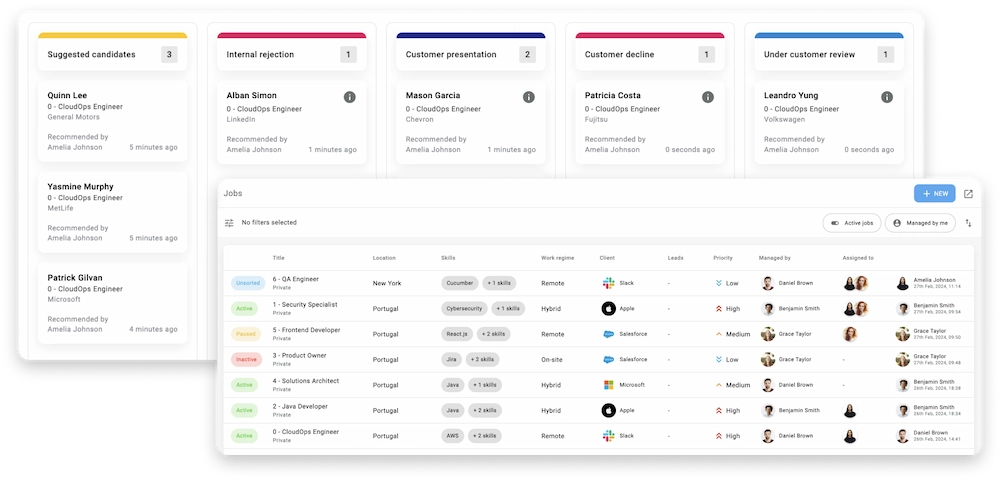
Fullsight's open vacancies features preview

Keep track of the vacancies
you’re working on

Fullsight enables efficient monitoring and management of all active job vacancies, ensuring that recruiters stay organized and up-to-date with each recruitment process.

  • Access all company’s vacancies and recommend candidates
  • Get an easy overview on what vacancies are assigned to you
  • Follow your candidates state in a vacancy

Integrations with your favorite apps with Fullsight

Greater speed, efficiency and productivity by integrating your tools with Fullsight

Slack icon
Microsoft teams icon
Gmail icon
Mailchimp icon
Outlook icon

Outsourcing firms count on Fullsight

Try it free

up to 3x

Faster recrutiment processes

up to 6x

Easier on onboardings

up to 4x

More visibility over operations

"Fullsight is an essential software for outsourcing companies, regardless of the size. Whether by improving recruitment processes or enhancing collaboration between recruitment and business teams, Fullsight simplifies operations and ensures visibility for greater success."

Bernardo Resende

Operations Manager - BySix, Portugal

Learn how Fullsight is surfing the wave

Take a deeper dive into how outsourcing firms work

How to integrate your ATS with other HR tools

Community

How to integrate your ATS with other HR tools

An Applicant Tracking System is no longer just a tool to collect CVs. In a competitive market shaped by AI recruitment, data-driven decision making and global talent mobility, your ATS must act as the central hub of your HR ecosystem. Integrating it with onboarding, payroll, HRIS and background check solutions transforms recruitment from an isolated process into a strategic engine for growth. Why ATS integration matters When your Applicant Tracking System communicates with other HR tools, you eliminate manual data entry, reduce errors and ensure compliance. Instead of copying candidate information across platforms, data flows automatically from recruitment to onboarding and payroll.This creates three immediate benefits:First, operational efficiency. Recruiters and HR teams save time and reduce administrative tasks.Second, better candidate experience. Once hired, the candidate’s information seamlessly transitions into onboarding without redundant forms.Third, stronger analytics. Integrated systems allow you to connect recruitment KPIs with retention, payroll costs and performance metrics.In industries like IT outsourcing and IT consulting, where speed and precision are critical, this integration can be a competitive differentiator. Integrating your ATS with onboarding tools Onboarding is the first real employee experience after recruitment. When your Applicant Tracking System is integrated with onboarding software, candidate data automatically generates contracts, compliance documents and training workflows.Modern AI recruitment platforms use APIs to connect these systems securely. This ensures that personal information, job details and compensation packages are transferred accurately. It also supports remote hiring, which is essential in IT outsourcing projects that often involve international talent pools.Best practice includes using standardized APIs, ensuring GDPR compliance and conducting regular data audits. Connecting ATS to payroll systems Payroll integration reduces the risk of discrepancies between offer letters and actual payments. Once a candidate accepts the offer, compensation details move directly from the Applicant Tracking System to payroll software.This integration supports transparency and compliance, particularly important in IT consulting environments where project-based billing and variable compensation structures are common. Linking ATS with HRIS platforms Your HRIS is the backbone of employee lifecycle management. When integrated with your Applicant Tracking System, it ensures a smooth transition from candidate to employee record.This unified data structure enables better workforce planning, talent analytics and strategic decision making. In AI recruitment environments, the data collected during hiring can later support performance analysis and internal mobility strategies.Integration also enhances reporting capabilities, allowing HR leaders to track time to hire, cost per hire and long-term retention in a single ecosystem. Automating background checks Background checks are critical for risk management. By integrating your ATS with background verification providers, checks can be triggered automatically once a candidate reaches a specific stage.This reduces delays and ensures compliance with internal and regulatory standards. Automated notifications and status updates improve transparency for both recruiters and candidates.In highly regulated sectors, including technology services and IT outsourcing, this automation protects both clients and organizations. Technical considerations for successful integration To successfully integrate your Applicant Tracking System with onboarding, payroll, HRIS, and background checks, consider the following:Use secure APIs and ensure data encryption.Validate compatibility between platforms before implementation.Prioritize scalability to support business growth.Ensure compliance with data protection regulations such as GDPR.Invest in IT consulting expertise if internal capabilities are limited.Strong IT consulting support is especially valuable when managing complex integrations across multiple vendors and international operations. Build a connected HR ecosystem with Fullsight Integration is not just a technical upgrade. It is a strategic move toward smarter recruitment, stronger analytics, and better workforce management. A modern Applicant Tracking System powered by AI recruitment capabilities can become the core of your entire HR technology stack.Fullsight is an Applicant Tracking System designed to integrate seamlessly with onboarding platforms, payroll systems, HRIS solutions, and background check providers. He combines advanced AI recruitment features with a flexible architecture that supports IT outsourcing and IT consulting environments.If you want to transform your recruitment process into a fully connected HR ecosystem, explore how Fullsight can centralize your Applicant Tracking System and unlock the full potential of your talent strategy.

Read more
How to make your ATS hiring process GDPR compliant

Community

How to make your ATS hiring process GDPR compliant

Recruitment has become increasingly data driven. From CV parsing to AI recruitment scoring, modern Applicant Tracking System platforms process large volumes of personal data every day. This brings efficiency, but it also creates legal responsibility. If your ATS hiring process is not GDPR compliant or at least GDPR like, you may be exposing your company to unnecessary risk, especially in IT outsourcing and IT consulting environments where data often crosses borders.This article explains how to align your Applicant Tracking System with GDPR principles in a clear and accessible way, without killing innovation or slowing down hiring. Why GDPR matters in an Applicant Tracking System The General Data Protection Regulation applies to any organization processing personal data of EU residents. That includes names, emails, CVs, LinkedIn profiles, interview notes and even AI generated candidate scores.An Applicant Tracking System is, by design, a central hub for this information. When combined with AI recruitment tools, the responsibility increases. GDPR requires transparency, fairness, security and purpose limitation. In simple terms, you must know why you collect candidate data, how long you keep it, and who can access it.For official guidance, the GDPR text itself is available at https://gdpr.eu and practical explanations can be found on the European Commission website https://commission.europa.eu. Lawful basis and consent in recruitment Every ATS hiring process must rely on a lawful basis for processing data. In recruitment, this is usually legitimate interest or consent.Consent must be explicit, informed and easy to withdraw. Your Applicant Tracking System should allow candidates to clearly accept privacy terms and to request deletion of their data. Pre ticked boxes or vague language are not enough.If you use AI recruitment for CV screening or ranking, GDPR also emphasizes the right to explanation. Candidates should be informed when automated decision making is used and how it impacts them. The UK Information Commissioner offers clear guidance on this topic at https://ico.org.uk. Data minimization and retention policies A common mistake in ATS platforms is storing data forever. GDPR requires data minimization and limited retention. Only collect what you truly need and define clear retention periods.For example, if a candidate is not hired, their data should be automatically deleted or anonymized after a defined time, unless they explicitly agree to stay in your talent pool. A modern Applicant Tracking System should make this process configurable and auditable.This is particularly important in IT consulting and IT outsourcing, where recruiters may handle data for multiple clients at once. Security and access control in AI recruitment Security is a core GDPR principle. Your ATS must implement strong technical and organizational measures. This includes encryption, role based access control, logging and regular security audits.When AI recruitment tools are involved, ensure that models do not expose sensitive data and that vendors clearly explain how data is processed. Trusted standards such as ISO 27001 are often referenced as best practice. You can read more about information security management at https://www.iso.org. Vendors, processors and international data transfers Most Applicant Tracking System solutions rely on third party vendors for hosting, analytics or AI recruitment features. GDPR requires clear data processing agreements with all processors.If data is transferred outside the EU, additional safeguards are mandatory. Standard Contractual Clauses are the most common solution. The European Data Protection Board provides up to date recommendations at https://edpb.europa.eu. Fullsight is an Applicant Tracking System designed with compliance, transparency and scalability in mind. He supports GDPR compliant workflows while still enabling powerful AI recruitment features. For companies working in IT outsourcing or IT consulting, Fullsight helps centralize hiring data, control access and automate retention policies without adding complexity.By choosing Fullsight as your ATS, you align your hiring process with GDPR principles while keeping recruitment fast, intelligent and human focused.

Read more
How to use ATS analytics to improve your hiring funnel

Community

How to use ATS analytics to improve your hiring funnel

Hiring great talent is no longer about intuition alone. In a market shaped by AI recruitment, IT outsourcing, and highly competitive tech roles, data driven decisions are what truly move the needle. This is where ATS analytics inside an Applicant Tracking System become a game changer. By understanding what happens at every stage of the hiring funnel, companies can reduce time to hire, improve candidate quality, and create a smoother experience for both recruiters and candidates. Why ATS analytics matter in modern recruitment An Applicant Tracking System is no longer just a place to store CVs. When used strategically, it becomes a powerful decision making tool for startups, enterprises, and especially IT consulting organizations. ATS analytics provide clear visibility into recruiter performance, candidate behavior, and bottlenecks across the entire hiring funnel.In fast paced AI recruitment environments, relying on gut feeling leads to delays and inconsistent results. Data allows hiring teams to move with confidence and align recruitment outcomes with business priorities. Understanding the hiring funnel through data The hiring funnel usually includes sourcing, screening, interviewing, offer, and hiring. ATS analytics help teams see how candidates progress through each stage and where they tend to drop off. This level of transparency is essential for companies working in IT outsourcing, where hiring speed and talent availability directly impact client delivery.When every stage is measurable, inefficiencies stop being invisible. Key ATS metrics you should track Time to hire: This metric indicates the duration from job opening to offer acceptance. A long time to hire often indicates slow approvals, scheduling issues, or inefficient screening. ATS analytics help identify exactly where time is being lost.Source of hire: Knowing where your strongest candidates come from helps optimize recruitment spend. Whether candidates are sourced from referrals, job boards, or professional networks, an Applicant Tracking System reveals which channels deliver the highest quality talent.Stage conversion rates: Tracking how many candidates move from application to interview and from interview to offer helps assess the effectiveness of each stage. Low conversion rates may point to unclear job requirements or mismatched profiles.Candidate drop-off rate: If candidates abandon the process, it is usually a sign that the hiring funnel is too long or lacks effective communication. ATS analytics make it easier to detect and fix these friction points early.Quality of hire: This metric connects recruitment with long-term performance and retention. It is especially important for IT consulting teams where technical skills and cultural fit are critical for long-term success. Turning ATS analytics into action Collecting data is only the first step. The real value of ATS analytics comes from acting on insights. If interviews are slowing down the funnel, processes can be simplified. If a sourcing channel underperforms, investment can be shifted elsewhere. Over time, this creates a hiring funnel that is predictable, scalable, and aligned with growth. The role of AI recruitment in ATS analytics Modern Applicant Tracking System platforms increasingly rely on AI recruitment to enhance analytics. AI helps detect patterns, automate repetitive tasks, and predict candidate success. For IT outsourcing companies managing large volumes of technical profiles, AI powered ATS analytics significantly reduce manual work while improving hiring accuracy. Fullsight is an Applicant Tracking System built to transform ATS analytics into measurable hiring results. He centralizes all recruitment data across the hiring funnel, making it easy to track key metrics, improve decision making, and support advanced AI recruitment strategies. For companies operating in IT consulting and IT outsourcing, Fullsight helps turn recruitment into a strategic advantage by delivering speed, clarity, and control within a single ATS platform.

Read more
How to clean up your candidate database

Community

How to clean up your candidate database

Keeping a clean and reliable candidate database is one of the most underestimated challenges in recruitment. As Applicant Tracking System platforms grow and integrate AI recruitment features, poor data hygiene can quietly undermine performance, reporting accuracy, and candidate experience. For companies involved in IT consulting and IT outsourcing, where talent quality and speed matter, a messy ATS database is more than an inconvenience. It becomes a real business risk.This article explains how to clean up your candidate database effectively and why data hygiene should be a strategic priority for any recruitment team using an Applicant Tracking System. Why data hygiene matters in an Applicant Tracking System An ATS is only as good as the data it contains. Duplicate profiles, outdated resumes, missing consent information, and inconsistent tagging reduce the value of automation and analytics. AI recruitment tools rely heavily on structured and accurate data to rank candidates, suggest matches, and support hiring decisions. When the data is unreliable, AI outcomes are unreliable too. Common data issues hiding in your candidate database Most ATS platforms accumulate problems over time. Typical issues include multiple records for the same candidate, profiles with outdated contact details, incomplete skill information, and candidates stored without clear source or consent status. In IT outsourcing and IT consulting environments, where candidates are often revisited for future projects, these issues become especially problematic.Another frequent issue is inconsistent data entry. Recruiters may use different naming conventions for skills or job titles, which makes search and reporting far less effective. Over time, this creates a database that looks full but delivers little value. Best practices to clean and maintain ATS data The first step is auditing your existing data. Identify duplicates, inactive profiles, and records that no longer comply with data protection regulations. Many modern Applicant Tracking System solutions include built-in tools for detecting duplicates and incomplete profiles. Using them regularly makes a significant difference.Next, standardize your data structure. Define clear rules for skill tagging, job titles, locations, and candidate status. This is essential for AI recruitment features to work correctly. Clear standards also help new recruiters onboard faster and reduce human error.Automation plays a key role. Schedule regular data clean-up routines, such as archiving inactive candidates or prompting updates after a defined period. Finally, train your team. Even the most advanced ATS cannot compensate for inconsistent usage. Recruiters should understand why data hygiene is important and how it affects sourcing, reporting, and compliance. Data hygiene as a foundation for AI recruitment AI recruitment tools are becoming standard in IT consulting and IT outsourcing. They promise faster screening, better matching, and predictive insights. None of this works without clean data. High quality candidate information allows AI models to learn patterns accurately and reduce bias.Clean data also improves candidate experience. Accurate communication, faster feedback, and relevant opportunities build trust and strengthen your employer brand. Fullsight is an Applicant Tracking System designed to help recruitment teams maintain a healthy candidate database while scaling efficiently. As an ATS, Fullsight focuses on structured data, smart automation, and AI recruitment readiness. He helps companies in IT consulting and IT outsourcing keep candidate information accurate, compliant, and actionable over time.By combining intuitive workflows with data driven features, Fullsight turns data hygiene from a manual burden into a natural part of everyday recruitment. A clean ATS is not just about organization. With Fullsight, it becomes a competitive advantage.

Read more
Loading...